7 Pilates Moves for Fibromyalgia Beginners
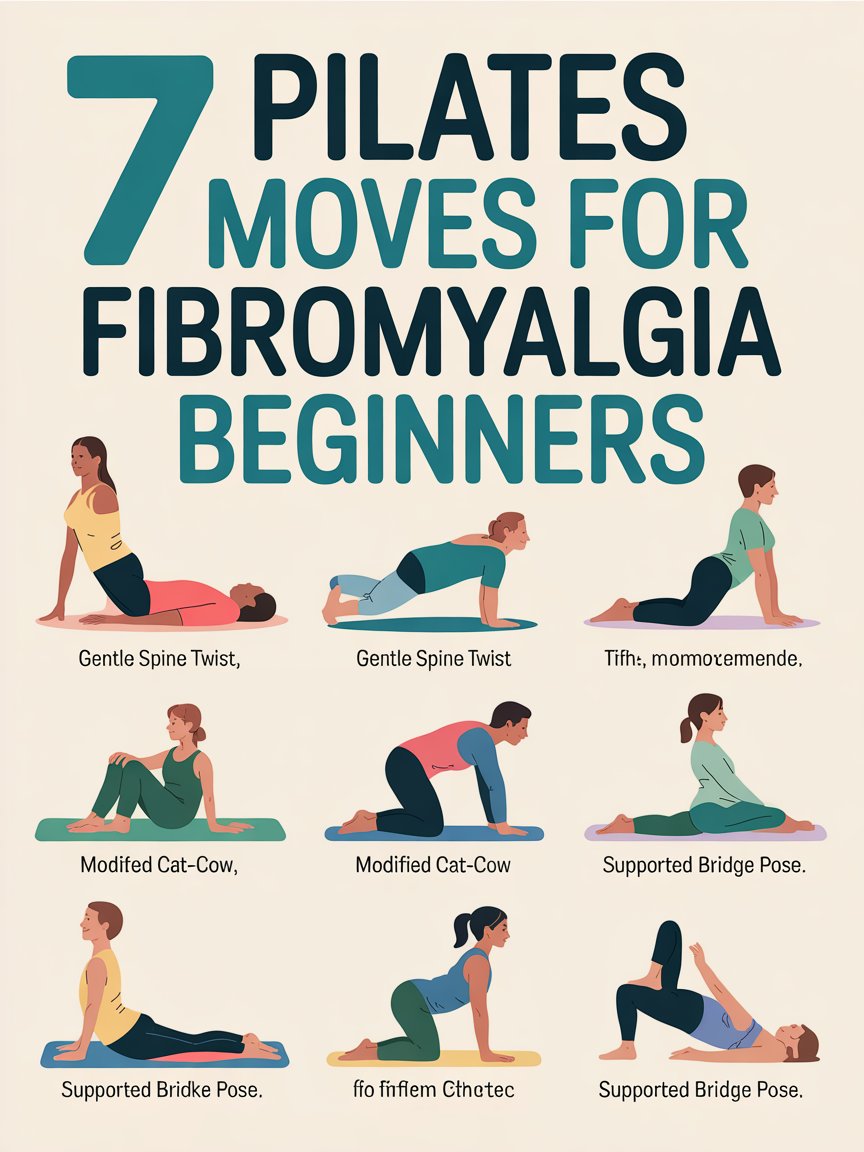
7 Pilates Moves for Fibromyalgia Beginners
Introduction
Starting an exercise routine with Fibromyalgia can feel intimidating, especially when pain and fatigue are unpredictable. Pilates offers a gentle, controlled way to build strength, improve flexibility, and support overall body awareness—making it ideal for beginners managing fibromyalgia.
Why Pilates Helps with Fibromyalgia
Pilates focuses on slow, precise movements and breathing techniques. This helps strengthen muscles without overexertion, improves posture, and reduces strain on joints. It’s especially beneficial for easing stiffness and promoting relaxation.
1. Pelvic Tilt
A foundational move for core stability.
Lie on your back with knees bent and feet flat. Gently tilt your pelvis to press your lower back into the floor, then release. This movement strengthens the core and reduces lower back tension.
2. Knee Folds
A gentle way to activate abdominal muscles.
From a lying position, slowly lift one foot off the floor, keeping your knee bent, then lower it back down. Alternate legs while keeping your movements controlled and smooth.
3. Arm Openings
This exercise improves upper-body mobility.
Lie on your side with arms extended in front of you. Slowly open your top arm across your body, following it with your eyes, then return to the starting position. This helps reduce stiffness in the chest and shoulders.
4. Seated Spine Stretch
A simple stretch for spinal flexibility.
Sit tall with your legs extended and gently reach forward, rounding your spine slightly. Move slowly and avoid forcing the stretch. This helps release tension in the back.
5. Heel Slides
A beginner-friendly lower-body exercise.
Lie on your back and slowly slide one heel toward your body, bending your knee, then slide it back out. Alternate legs to improve hip and knee mobility.
6. Chest Lift
A mild core-strengthening movement.
Lie on your back with knees bent and hands behind your head. Gently lift your head and shoulders off the floor, then lower back down. Keep the movement small and controlled to avoid strain.
7. Leg Drops
A controlled movement for core stability.
Lie on your back with knees bent and lifted. Slowly lower one foot toward the floor, then bring it back up. Alternate legs while maintaining a steady pace.
Tips for Practicing Safely
Start slowly and focus on quality over quantity. Keep your breathing steady and avoid holding your breath. If any movement causes pain, stop and modify it to suit your comfort level.


Leave a Comment