8 Things That Increase Sensitivity and Pain
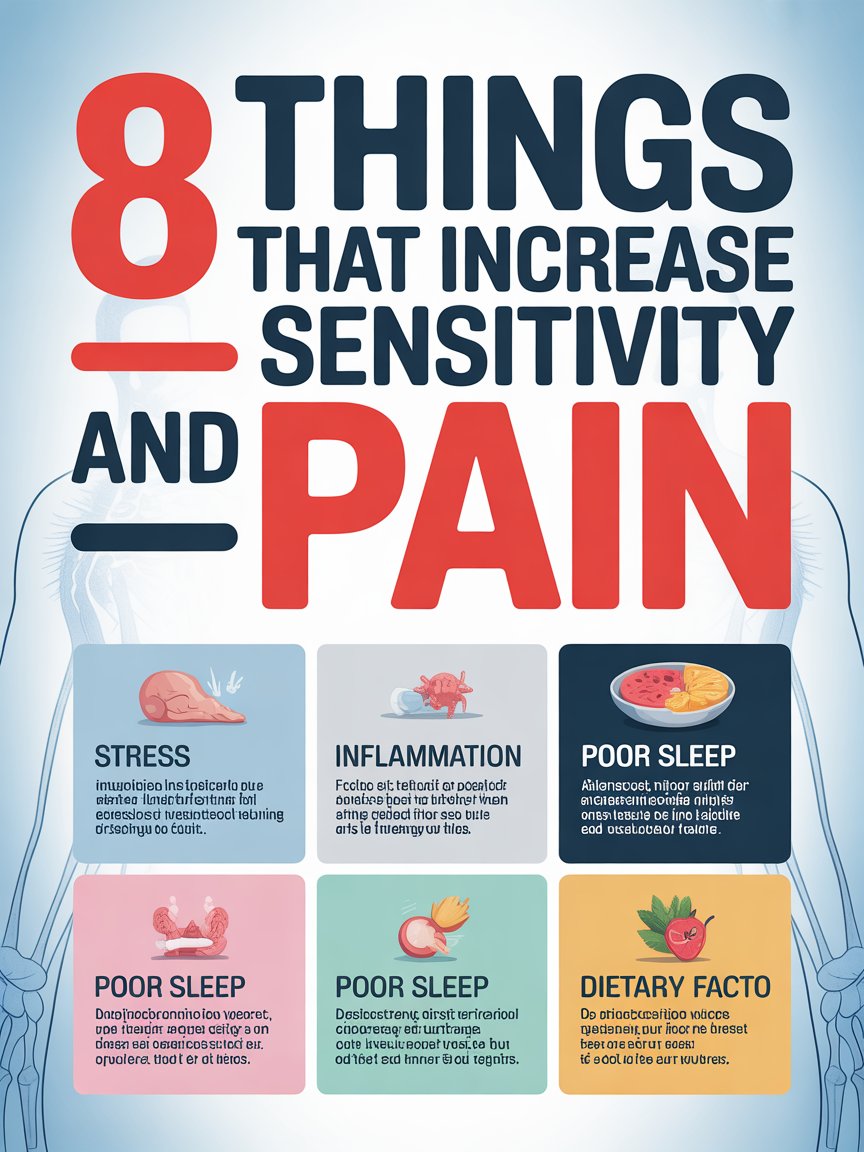
8 Things That Increase Sensitivity and Pain
Introduction: Why Sensitivity Increases
Heightened sensitivity to pain is common in chronic conditions like Fibromyalgia. The nervous system becomes more reactive, making even mild stimuli feel uncomfortable or painful. Certain daily habits and triggers can worsen this sensitivity. Understanding and avoiding them can help you feel more in control and reduce overall discomfort.
1. Poor Sleep Quality
Lack of deep, restorative sleep can make the body more sensitive to pain. When the body doesn’t rest properly, the nervous system becomes more reactive. Improving sleep habits can significantly reduce sensitivity.
2. Chronic Stress
Stress increases the release of hormones that heighten pain perception. It also causes muscle tension, which adds to discomfort. Managing stress can help calm the nervous system and lower pain levels.
3. Overexertion
Doing too much physical or mental work can overwhelm the body. This often leads to increased pain and fatigue. Pacing your activities helps prevent overstimulation and flare-ups.
4. Poor Diet Choices
A diet high in processed foods, sugar, and unhealthy fats can contribute to inflammation. Increased inflammation can heighten pain sensitivity. Eating whole, nutrient-rich foods supports better balance.
5. Lack of Movement
Too little activity can lead to stiffness and reduced flexibility. This can make the body more sensitive to movement and pressure. Gentle exercise helps maintain mobility and reduce discomfort.
6. Dehydration
Not drinking enough water can affect muscle function and increase fatigue. Dehydration may also make the body feel more sensitive and uncomfortable. Staying hydrated supports overall function.
7. Weather Changes
Cold or damp weather can increase stiffness and discomfort in many people. Sudden temperature changes may also trigger sensitivity. Keeping warm and adjusting your environment can help reduce these effects.
8. Sensory Overload
Bright lights, loud noises, or crowded environments can overstimulate the nervous system. This can increase both stress and pain sensitivity. Creating a calm, quiet environment can help you feel more relaxed.
Conclusion: Calming the Nervous System
Pain sensitivity is often influenced by everyday habits and environmental factors. By improving sleep, managing stress, staying active, and creating a calm environment, you can help reduce sensitivity and discomfort. Small lifestyle changes can lead to better control and improved quality of life.


Leave a Comment