9 Daily Habits That Increase Body Pain
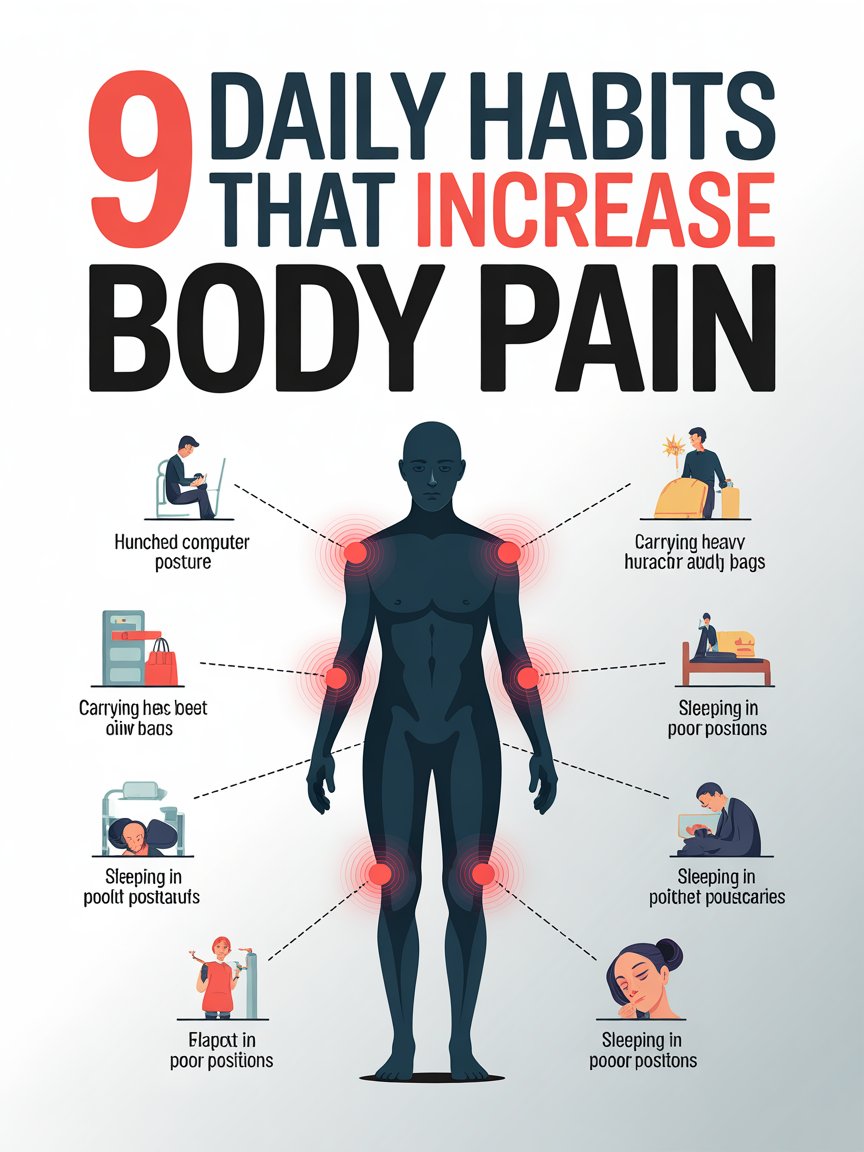
9 Daily Habits That Increase Body Pain
Introduction: How Everyday Habits Affect Pain
Body pain is not always caused by injury or illness—it can also be influenced by daily habits. Small actions repeated over time can increase muscle tension, inflammation, and discomfort. For people dealing with chronic conditions like Fibromyalgia, these habits can make symptoms worse. Identifying and changing these behaviors can help reduce pain and improve overall comfort.
1. Sitting for Too Long
Spending long hours sitting can lead to muscle stiffness and poor circulation. It places extra pressure on the lower back, neck, and shoulders. Taking short breaks to stand, stretch, or walk can help keep muscles flexible and reduce discomfort.
2. Poor Posture
Slouching or hunching over devices can strain muscles and joints. Poor posture often leads to neck pain, back pain, and tension headaches. Maintaining proper alignment while sitting and standing can help prevent unnecessary strain.
3. Skipping Stretching
Not stretching regularly can cause muscles to become tight and less flexible. Tight muscles are more likely to develop pain and stiffness. Gentle daily stretching can improve mobility and reduce tension.
4. Overusing Muscles
Repeating the same movements or overworking certain muscle groups can lead to soreness and strain. This is common in both physical jobs and repetitive daily tasks. Balancing activity and giving muscles time to recover is important.
5. Lack of Physical Activity
While overuse can cause pain, too little movement can also be harmful. A sedentary lifestyle can weaken muscles and increase stiffness. Light, regular exercise helps maintain strength and flexibility.
6. Poor Sleep Habits
Lack of quality sleep can increase pain sensitivity and reduce the body’s ability to recover. Poor sleep also contributes to fatigue, which can make pain feel worse. Establishing a consistent sleep routine can support better recovery.
7. Dehydration
Not drinking enough water can lead to muscle cramps and fatigue. Dehydration may also increase inflammation in the body. Staying hydrated helps support muscle function and reduce discomfort.
8. Unhealthy Diet Choices
A diet high in processed foods, sugar, and unhealthy fats can contribute to inflammation. This may increase body pain over time. Choosing whole, nutrient-rich foods can support overall health and reduce pain.
9. Chronic Stress
Stress causes muscles to tighten, especially in the neck, shoulders, and back. Over time, this tension can lead to ongoing discomfort and pain. Managing stress through relaxation techniques can help reduce muscle tension.
Conclusion: Small Changes for Pain Relief
Daily habits have a powerful impact on how your body feels. By improving posture, staying active, eating well, and managing stress, you can reduce pain and support better health. Making small, consistent changes can lead to long-term comfort and improved quality of life.


Leave a Comment