9 Habits That Keep You in Pain
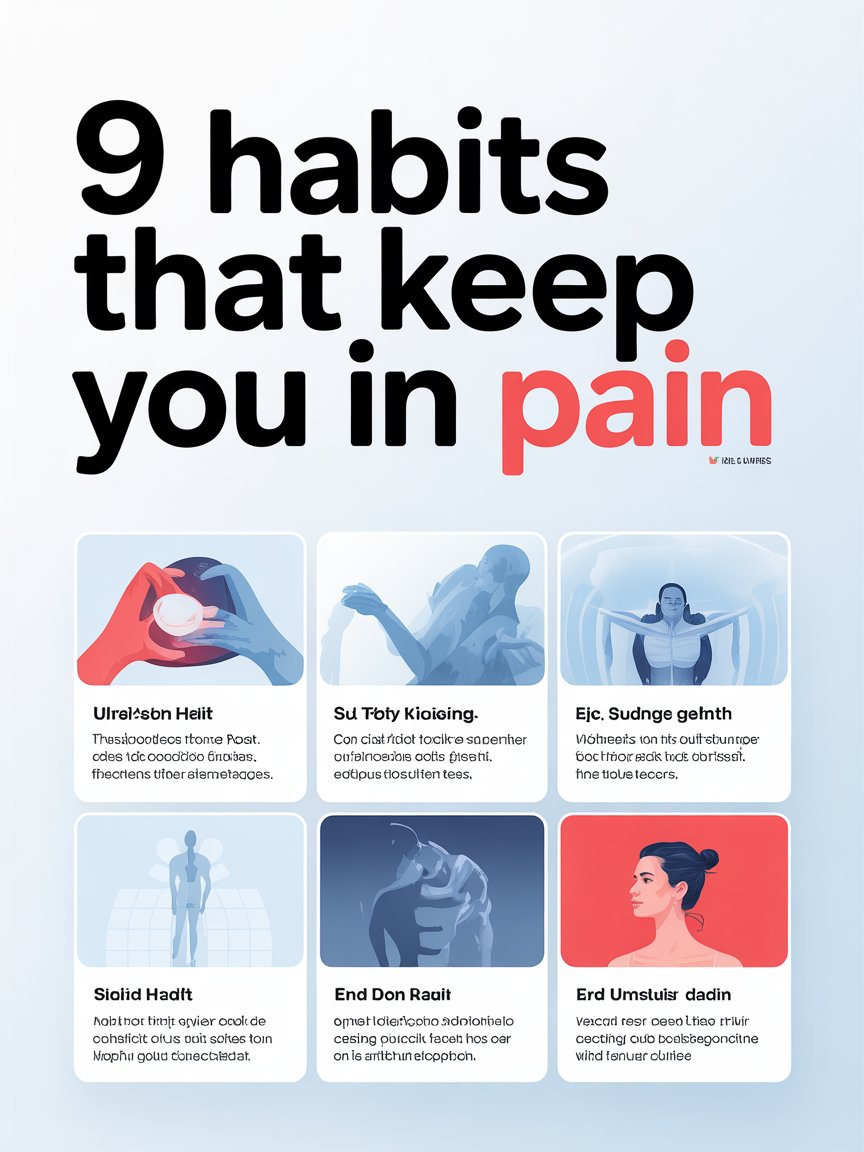
9 Habits That Keep You in Pain
Introduction: Why Pain Persists
Ongoing pain is not always just about a condition—it’s often influenced by daily habits. Small actions repeated over time can increase tension, inflammation, and discomfort. For people living with Fibromyalgia, these habits can make symptoms feel constant and harder to manage. Identifying and changing them can help you break the cycle of pain.
1. Ignoring Your Body’s Signals
Pushing through pain without listening to your body can make symptoms worse. Pain is a warning sign that something needs attention. Ignoring it often leads to flare-ups and longer recovery.
2. Sitting for Long Periods
Staying in one position for too long can cause stiffness and muscle tension. It reduces blood flow and puts strain on the back and neck. Taking breaks to move around helps reduce discomfort.
3. Poor Posture
Slouching or hunching over devices can strain muscles and joints. Over time, this leads to chronic pain, especially in the shoulders, neck, and lower back. Good posture supports better alignment and reduces stress on the body.
4. Lack of Stretching
Tight muscles are more prone to pain. Skipping stretching can lead to reduced flexibility and increased stiffness. Gentle daily stretching helps keep muscles relaxed and mobile.
5. Overexertion
Doing too much physical or mental work without rest can trigger flare-ups. Overexertion drains energy and increases pain levels. Pacing your activities is key to managing symptoms.
6. Poor Sleep Habits
Lack of quality sleep prevents the body from repairing itself. This can increase pain sensitivity and fatigue. Consistent, restful sleep is essential for reducing discomfort.
7. Unhealthy Diet Choices
A diet high in processed foods, sugar, and unhealthy fats can increase inflammation. This may worsen pain over time. Eating whole, nutrient-rich foods supports better health.
8. Chronic Stress
Stress causes muscles to tighten and increases pain sensitivity. Long-term stress keeps the body in a constant state of tension. Managing stress can help reduce both mental and physical discomfort.
9. Dehydration
Not drinking enough water can lead to muscle cramps, fatigue, and increased pain. Proper hydration supports muscle function and overall well-being.


Leave a Comment