9 Things That Affect Your Sleep Quality
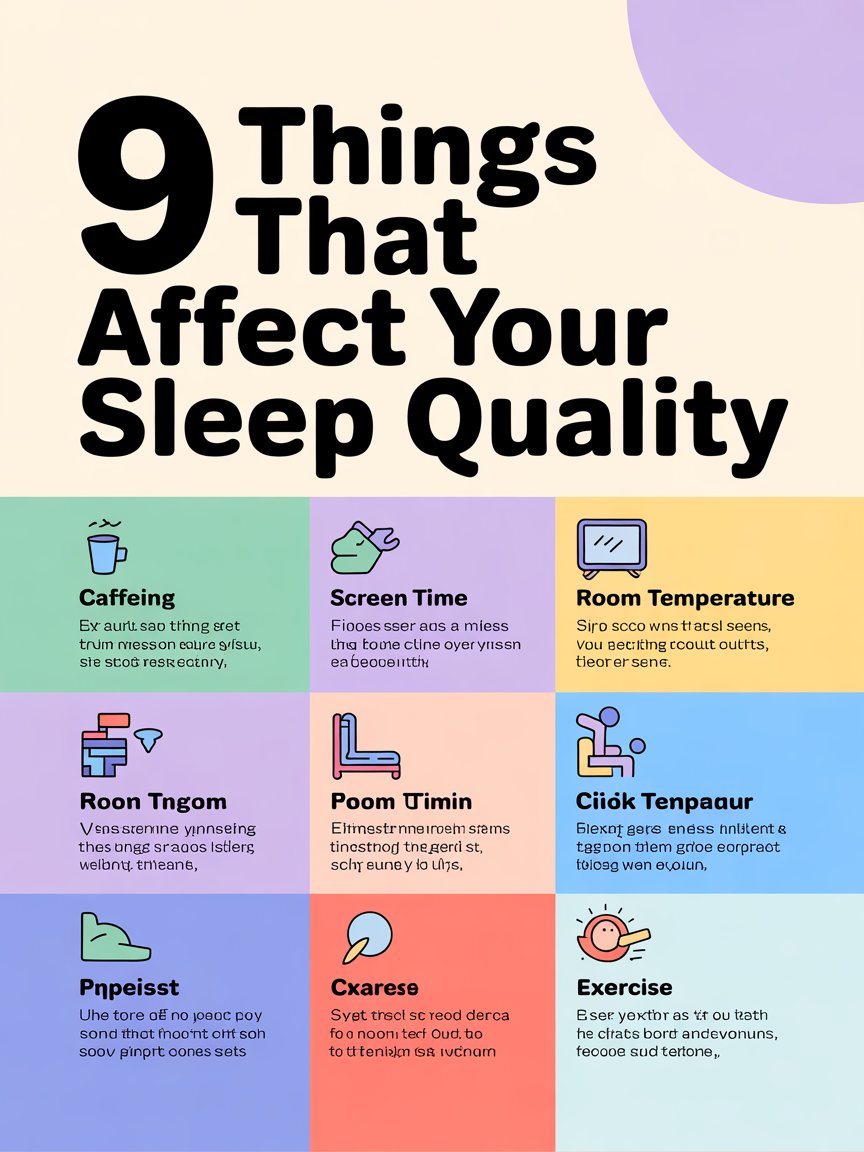
9 Things That Affect Your Sleep Quality
Introduction: Why Sleep Quality Matters
Good sleep is essential for physical health, mental clarity, and emotional balance. Poor sleep quality can lead to fatigue, irritability, and increased sensitivity to pain—especially in conditions like Fibromyalgia. Many everyday habits and environmental factors can interfere with restful sleep. Understanding these factors can help you build better sleep habits and wake up feeling refreshed.
1. Irregular Sleep Schedule
Going to bed and waking up at different times each day can disrupt your body’s internal clock. This makes it harder to fall asleep and wake up naturally. A consistent sleep schedule helps regulate your sleep cycle.
2. Excessive Screen Time
Using phones, tablets, or computers before bed exposes you to blue light, which can reduce melatonin production. This hormone is essential for sleep. Limiting screen time before bed can improve sleep quality.
3. Caffeine Intake Late in the Day
Caffeine can stay in your system for several hours and interfere with sleep. Consuming coffee, tea, or energy drinks in the evening can make it difficult to fall asleep and stay asleep.
4. Stress and Anxiety
High stress levels can keep your mind active and prevent relaxation. Racing thoughts and worry can make it harder to fall asleep. Managing stress through relaxation techniques can help improve sleep.
5. Poor Sleep Environment
A bedroom that is too bright, noisy, or uncomfortable can disrupt sleep. Light, noise, and an uncomfortable mattress or pillow can prevent deep rest. Creating a calm and comfortable environment is important.
6. Heavy Meals Before Bed
Eating large or heavy meals close to bedtime can make digestion uncomfortable and interfere with sleep. It is better to eat lighter meals in the evening to allow the body to relax.
7. Lack of Physical Activity
Not getting enough movement during the day can affect sleep quality. Physical activity helps regulate energy levels and promotes better rest. Even light exercise can improve sleep over time.
8. Daytime Napping
Long or irregular naps during the day can make it harder to fall asleep at night. While short naps can be helpful, excessive napping may disrupt your sleep cycle.
9. Dehydration
Not drinking enough water can cause discomfort, headaches, or dryness that may interrupt sleep. Staying hydrated throughout the day supports overall body function and better rest.
Conclusion: Improving Sleep Step by Step
Sleep quality is influenced by many daily habits and environmental factors. By maintaining a consistent routine, reducing screen time, managing stress, and creating a comfortable sleep environment, you can improve your rest. Better sleep leads to improved energy, reduced pain, and a healthier, more balanced life.


Leave a Comment